In Part 4 of my keynote speech, I addressed why we write and how that entails writing what we don't know as well as what we do. I cautioned how we must also assume accountability for what we create, so writing the first draft is merely the first step of a longer process. And on that note, I finally conclude this keynote series! Thanks for listening to me babble on and on if you've made it this far. ;)
As your own editor, you need to be a “self-conscious” one. I don’t mean self-conscious as in insecurity-ridden—I think we’ve all probably mastered that one just fine. What I mean is to be conscious of the kind of writer you are and the audience you’re writing for.
Step back from
your draft and look at it as a whole. Does it achieve what you want it to? Is this is what you wanted to write? Also, is this what your readers will want to read? How will they
experience it?
Because,
we can’t forget about the reader if we eventually want to share our work. Arguably
80% of its meaning will come from the reader,
not us.

No matter how much they might lose themselves in our writing, readers still form their own interpretations based on their personal experiences and attitudes. So, we want to strike a chord with them through our work so they can make their own meaning from it.
In many ways, our writing is self-examination. We see ourselves in our words every step of the way. But consider, too, how our writing can hold a mirror up to our readers, confirming or challenging their perspectives and possibly showing them another way of living and thinking. As much as your writing might be for yourself, it could also help your readers make sense of themselves, others, and the greater world around us.
And while I’m on the topic of others reading our work, allow me to drill this into your heads:
In many ways, our writing is self-examination. We see ourselves in our words every step of the way. But consider, too, how our writing can hold a mirror up to our readers, confirming or challenging their perspectives and possibly showing them another way of living and thinking. As much as your writing might be for yourself, it could also help your readers make sense of themselves, others, and the greater world around us.
And while I’m on the topic of others reading our work, allow me to drill this into your heads:

Everyone needs an editor.
Everyone needs an editor.
Everyone needs an editor.
I stress this not only as a writer whose manuscripts desperately need editing, but as an editor who’s prepared dozens of manuscripts for publication. Even the strongest stories with the strongest grammar need more work than you’d realize. Whether it’s idea development, pacing, style, or the nitty-gritty of sentence construction and continuity, everything you write needs another set of eyes. For as solitary as the act of writing is, we can’t do it alone.
Everything we write becomes our dear, sweet baby, and we can be ever so proud of it—and of ourselves—but it’s downright diva to think we’re above having our work critiqued. I know it’s scary, though. Writing is such a personal passion. Such a vulnerable one. What we write is who we are, and who likes hearing they’re anything less than perfect? So, frankly, every time we hand our work over to others, we’re giving them the power to upset us.
It’s hard to control how other people will respond to our writing, but we can control how graciously we respond to their feedback. It’s okay to admit we’re not perfect, and we’ll never improve unless we accept our limitations by accepting help from others. I actually feel more confident knowing that. Because I know I’m not alone, and once I can own my weaknesses, I can work to strengthen them.
As an editor, it never ceases to amaze me how much easier it is to identify issues in someone else’s manuscript than my own. As a writer, I’m simply too close to my story to see what others can. So, I welcome having my work edited. And I welcome editing others’ work, even if it takes me away from my writing—because it’s a thrill to help someone else share their story with the world, and I in turn learn so much from their talent and creativity.
Also, editing’s not just fixing what we’re doing wrong but learning what we’re doing right. As a teacher and an editor, I have always balanced my criticism with positive feedback so that my students and authors feel good about their work and remain confident in their voices and what they have to say. That’s why I end every editorial letter with this:
I stress this not only as a writer whose manuscripts desperately need editing, but as an editor who’s prepared dozens of manuscripts for publication. Even the strongest stories with the strongest grammar need more work than you’d realize. Whether it’s idea development, pacing, style, or the nitty-gritty of sentence construction and continuity, everything you write needs another set of eyes. For as solitary as the act of writing is, we can’t do it alone.
Everything we write becomes our dear, sweet baby, and we can be ever so proud of it—and of ourselves—but it’s downright diva to think we’re above having our work critiqued. I know it’s scary, though. Writing is such a personal passion. Such a vulnerable one. What we write is who we are, and who likes hearing they’re anything less than perfect? So, frankly, every time we hand our work over to others, we’re giving them the power to upset us.
It’s hard to control how other people will respond to our writing, but we can control how graciously we respond to their feedback. It’s okay to admit we’re not perfect, and we’ll never improve unless we accept our limitations by accepting help from others. I actually feel more confident knowing that. Because I know I’m not alone, and once I can own my weaknesses, I can work to strengthen them.
As an editor, it never ceases to amaze me how much easier it is to identify issues in someone else’s manuscript than my own. As a writer, I’m simply too close to my story to see what others can. So, I welcome having my work edited. And I welcome editing others’ work, even if it takes me away from my writing—because it’s a thrill to help someone else share their story with the world, and I in turn learn so much from their talent and creativity.
Also, editing’s not just fixing what we’re doing wrong but learning what we’re doing right. As a teacher and an editor, I have always balanced my criticism with positive feedback so that my students and authors feel good about their work and remain confident in their voices and what they have to say. That’s why I end every editorial letter with this:
“It’s an act of great trust when a writer shares his or her work with someone else and opens it to commentary. I thank you for this trust and hope my feedback demonstrates an understanding of your work, your style, and what you’re seeking to achieve.”
Because here’s the thing: No matter what, your writing is for yourself. Even when you’re sharing it with the world. Keeping an audience in mind doesn’t mean forgetting who you are at heart.

There’s endless advice out there for what we writers should and shouldn’t do. But, ultimately, there’s no one-size-fits-all formula to writing a good story, sketch, narrative, essay, poem, or play. We each bring something unique to the craft, and that’s something we should celebrate in our writing as well.
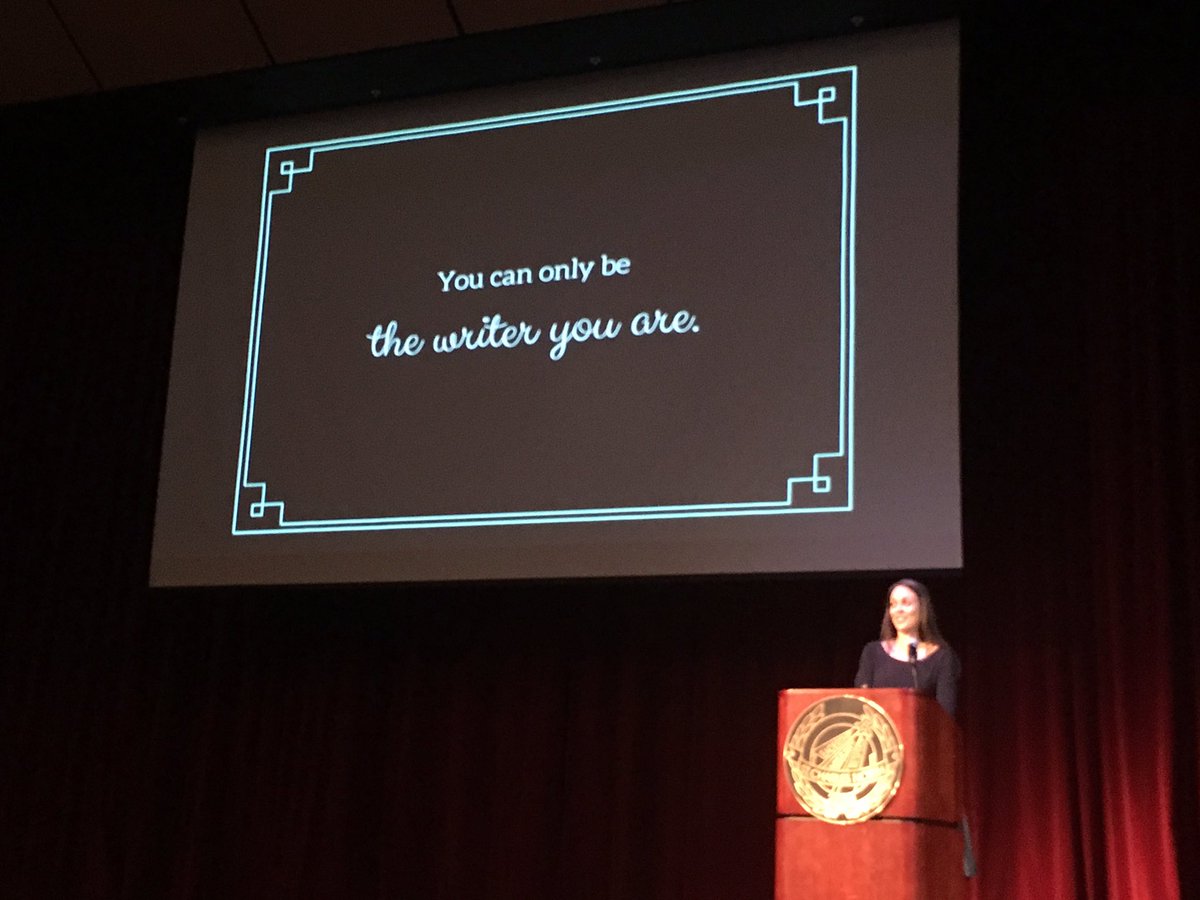
You can only be the writer you are. So, listen to your voice, and find your way of smelling the flowers.
You can only be the writer you are. So, listen to your voice, and find your way of smelling the flowers.


